
Validation
Wi-Fi Survey
Verify your Wi-Fi network performs as designed after deployment. A validation survey identifies coverage gaps, performance issues, and interference sources, giving you confidence that your network is ready for real-world use.
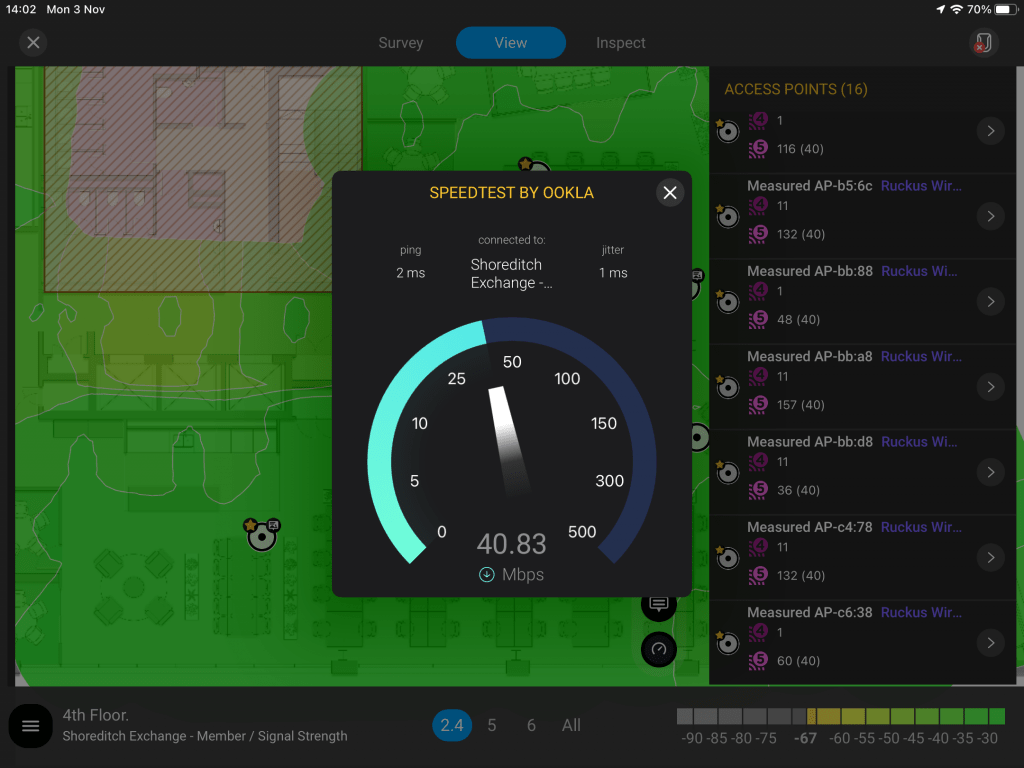
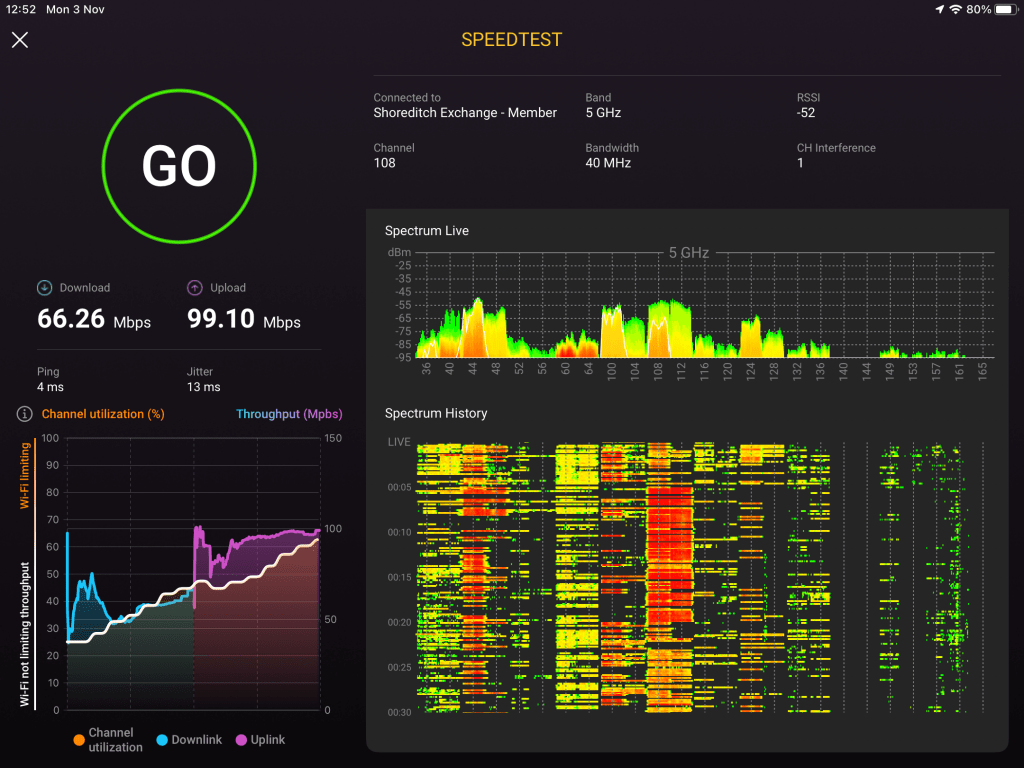

What is a Validation Survey?
A validation Wi-Fi survey is a post-installation survey conducted to verify and validate the performance and coverage of a Wi-Fi network after it has been deployed. The primary objective is to ensure that the network meets the design requirements and provides the expected level of service to end-users.
The validation survey is a critical step in ensuring the Wi-Fi network's success and reliability. It helps identify and address any issues that may have arisen during the deployment process, ensuring that the network delivers optimal performance and meets the requirements of the users and applications it serves.
By validating after installation, network administrators can fine-tune the network to ensure a smooth and robust wireless experience for all users.

The Validation Survey Process
The surveyor gathers the initial design and configuration details, including access point locations, transmit power settings, channel assignments, and other network parameters to use as a benchmark for comparison.
Using specialised Wi-Fi survey tools, the surveyor collects real-world data by measuring signal strength, signal-to-noise ratio (SNR), and other relevant metrics at various locations throughout the coverage area.
The collected data is analysed to assess the network's coverage and identify any areas with weak signals or coverage gaps that do not meet the design requirements.
The surveyor evaluates the network's performance by measuring data transfer rates, latency, and packet loss at different locations. This identifies performance bottlenecks or areas where the network may be underperforming.
The surveyor looks for potential sources of interference affecting the network's performance. This could include other Wi-Fi networks, non-Wi-Fi devices, or physical obstacles causing RF issues.
Survey results are compared to the initial design and expected performance metrics. Any discrepancies between the design and actual performance are noted for further investigation and optimisation.
Based on the survey findings, the surveyor provides recommendations for improving performance and coverage. This may involve adjusting access point configurations, optimising channel assignments, or adding additional access points in weak areas.
A detailed validation report is generated, summarising the survey findings, performance metrics, and recommended actions. This serves as a reference for network administrators to make necessary adjustments and improvements.
Active vs Passive Survey
Validation surveys can be conducted in two ways, and we often use both together for the most comprehensive assessment of your network's health and performance.
Other Survey Methods
Plan and design your Wi-Fi network from floor plans alone, before a single cable is installed.
On-site survey using a temporary access point to simulate real-world conditions and gather accurate coverage data.
Combine predictive and AP on a Stick surveys for near-perfect results. Ideal for large rollouts and complex buildings.