
Predictive
Wi-Fi Survey
Plan and design your Wi-Fi network before a single cable is installed. Using specialist software, we model your wireless environment from floor plans alone, saving time and cost in the early planning stages.

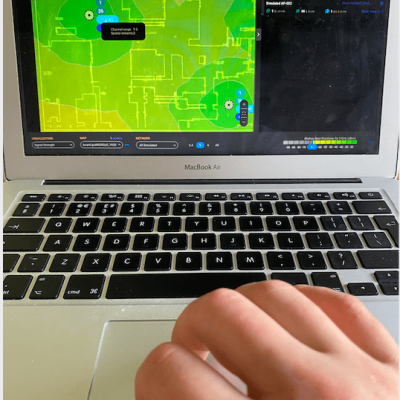

What is a Predictive Survey?
A predictive Wi-Fi survey is a method used to plan and design a Wi-Fi network without physically visiting the location. Instead of conducting an on-site survey, predictive surveys use specialised software to model the wireless environment based on floor plans, building materials, and other relevant information.
Predictive Wi-Fi surveys are valuable in the early planning stages of a Wi-Fi network deployment. They help estimate the number of access points needed, optimal access point locations, and potential challenges that may arise during the installation.
While predictive surveys offer valuable insights, they do not replace the need for validation through physical on-site surveys, especially in complex environments with unique challenges or heavily dynamic RF conditions. Combining both predictive and on-site surveys leads to a robust and successful Wi-Fi network deployment.
The Predictive Survey Process
The Wi-Fi surveyor gathers information about the location, including building blueprints, floor plans, dimensions, and construction materials. They also consider the number of users, expected devices, and the intended use of the Wi-Fi network.
Using Wi-Fi planning software, the surveyor inputs the collected data and creates a virtual representation of the wireless environment. The software simulates Wi-Fi signal propagation, interference, and coverage based on the provided information.
The software suggests the optimal locations for access points based on the predictive modelling. It takes into account factors such as signal strength, coverage area, and potential sources of interference to recommend the best placement.
The surveyor configures the virtual Wi-Fi network with appropriate settings, including channel allocation, transmit power, and security settings.
The software generates heatmaps and reports that illustrate the predicted signal strength and coverage throughout the location. These visualisations help assess potential coverage gaps, interference areas, and areas with sufficient signal strength.
The surveyor fine-tunes the network design by adjusting access point locations, settings, or configurations in the software. Multiple iterations may be performed to achieve the desired Wi-Fi network performance.
When to Use a Predictive Survey
Start the network design process electronically as soon as a floor plan is available, before construction is complete.
Estimate access point counts, identify potential issues, and get a clear picture of costs before committing to an installation.
Survey one site on-site to understand the RF environment, then replicate electronically across similar sites for a cost-effective rollout.
Other Survey Methods
An on-site survey using a temporary access point to simulate real-world conditions and gather accurate coverage data.
Verify and validate the performance of your Wi-Fi network after installation to ensure it meets design requirements.
Combine predictive and AP on a Stick surveys for near-perfect results. Ideal for large rollouts and complex buildings.